Colette Hébert
Movement on Metal
Canadian born, San Diego-based artist working in mixed media on aluminum.
For over four decades, Hébert has poured oil, acrylic, latex, ink, and gold leaf onto recycled metal — letting incompatible materials collide, crack, and reveal the figures hidden inside them.
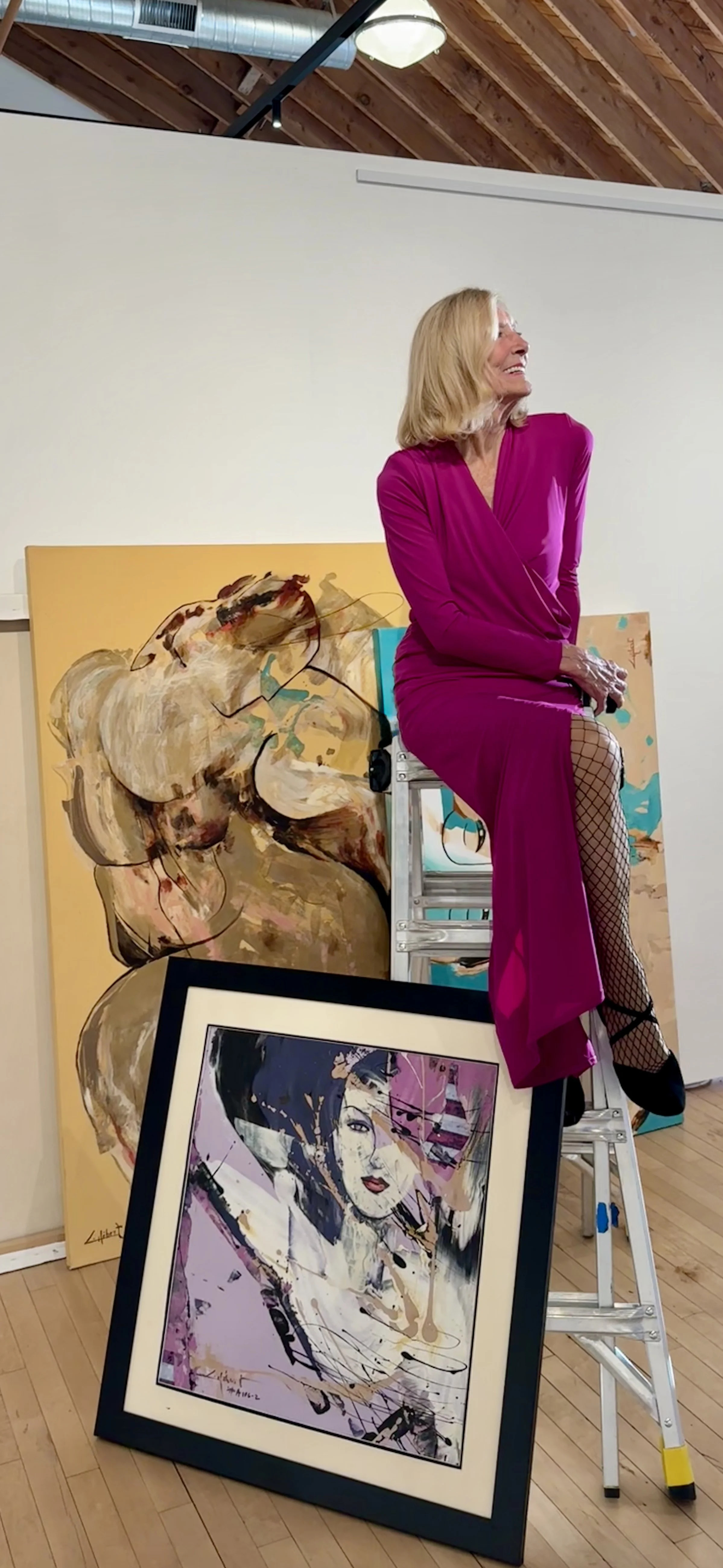
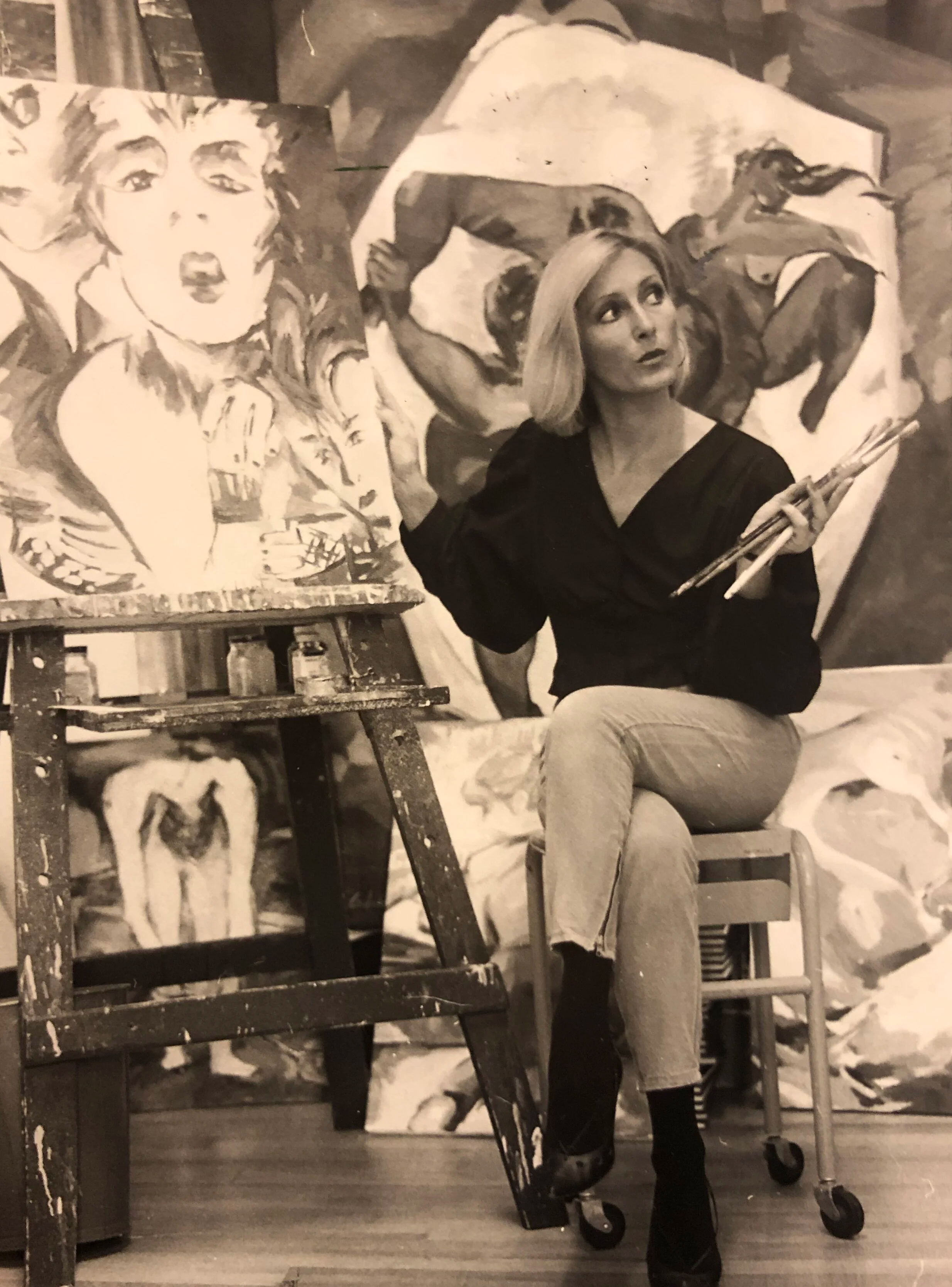
Colette Hébert doesn't paint. She pours it.
Oil, acrylic, latex, ink, gold leaf, and a few secret ingredients, all onto aluminum sheets. The substances repel one another. Materials that shouldn't work together, do, crackling into rich textures.
She works fast, with a spatula instead of a brush, and somewhere in the process a figure appears. She doesn't plan it.
She watches it arrive.
Born in Canada, Hébert trained under Hungarian painter Laszlo Leslie Schalk, steeped in the Fauvist tradition of Matisse. It was Schalk who taught her lavis, the old French washed-ink technique that demands speed and intuition, no time to think, only to follow the ink as it spreads and make decisions before it settles.
The aluminum began as a practical choice. Hébert sourced recycled printing sheets from newspapers — lightweight enough to stack and carry as she traveled from Montreal to Spain to South America, before settling in New York in 1993.
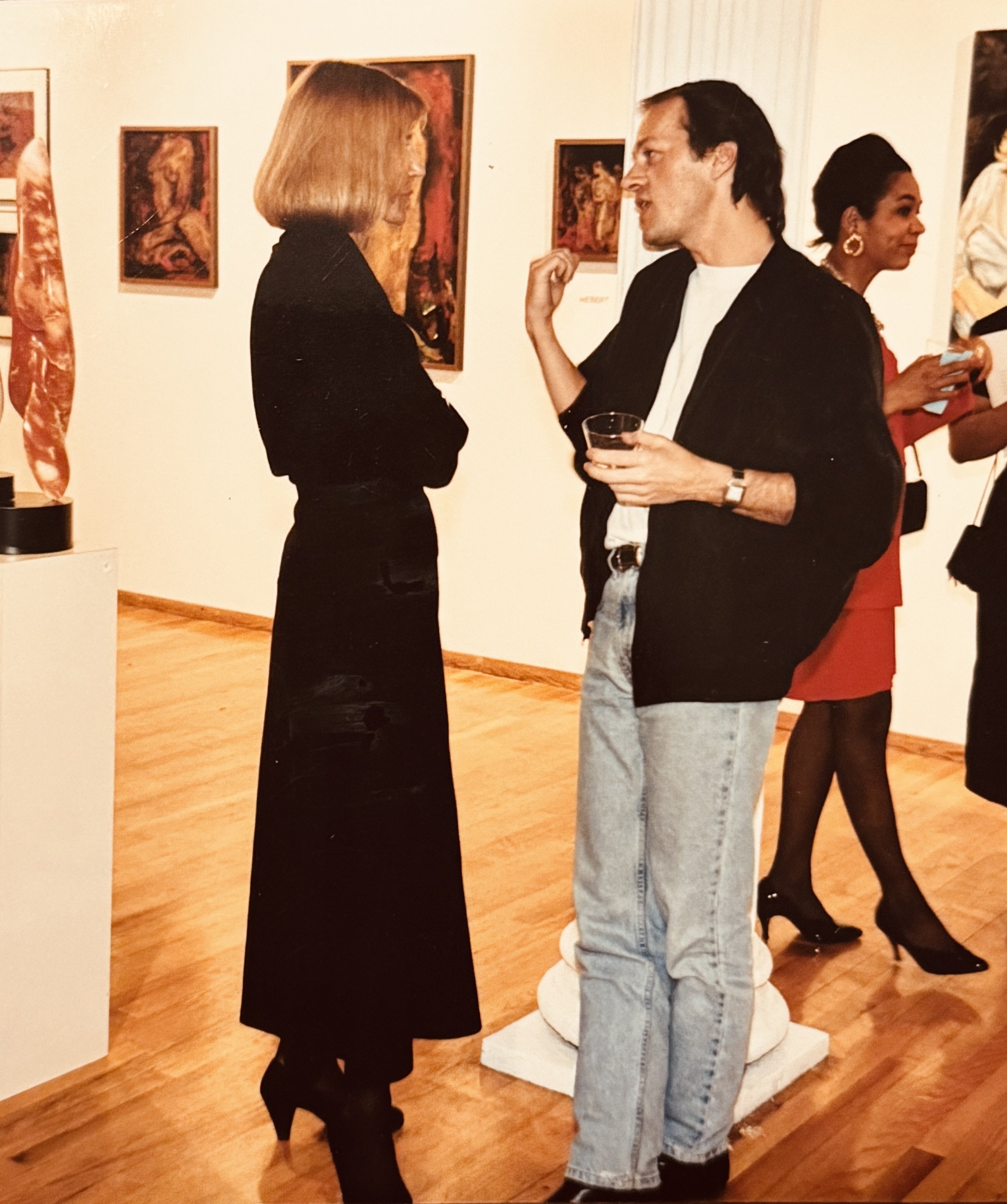
A breakthrough show at Gallery 54 in New York led to Passions Gallery, where she spent 20 summers exhibiting in Provincetown and became their longest-exhibiting artist.
Then she stopped painting entirely.
She turned to Argentine tango, and by 2005 she and her partner were finalists at the World Championships in Buenos Aires. For Hébert, tango was the same creative release — a blank canvas, freedom to express through movement. Painting with her feet.
In 2020, a birthday request from her partner put the spatula back in her hand.
Her subject has been primarily the female figure, but never in full detail. A few strokes conjure a torso, the sweep of an arm, the thrust of a hip. The figures are not posed — they are mid-reverie, half-delivered by the incompatible materials that simultaneously reveal and conceal them.
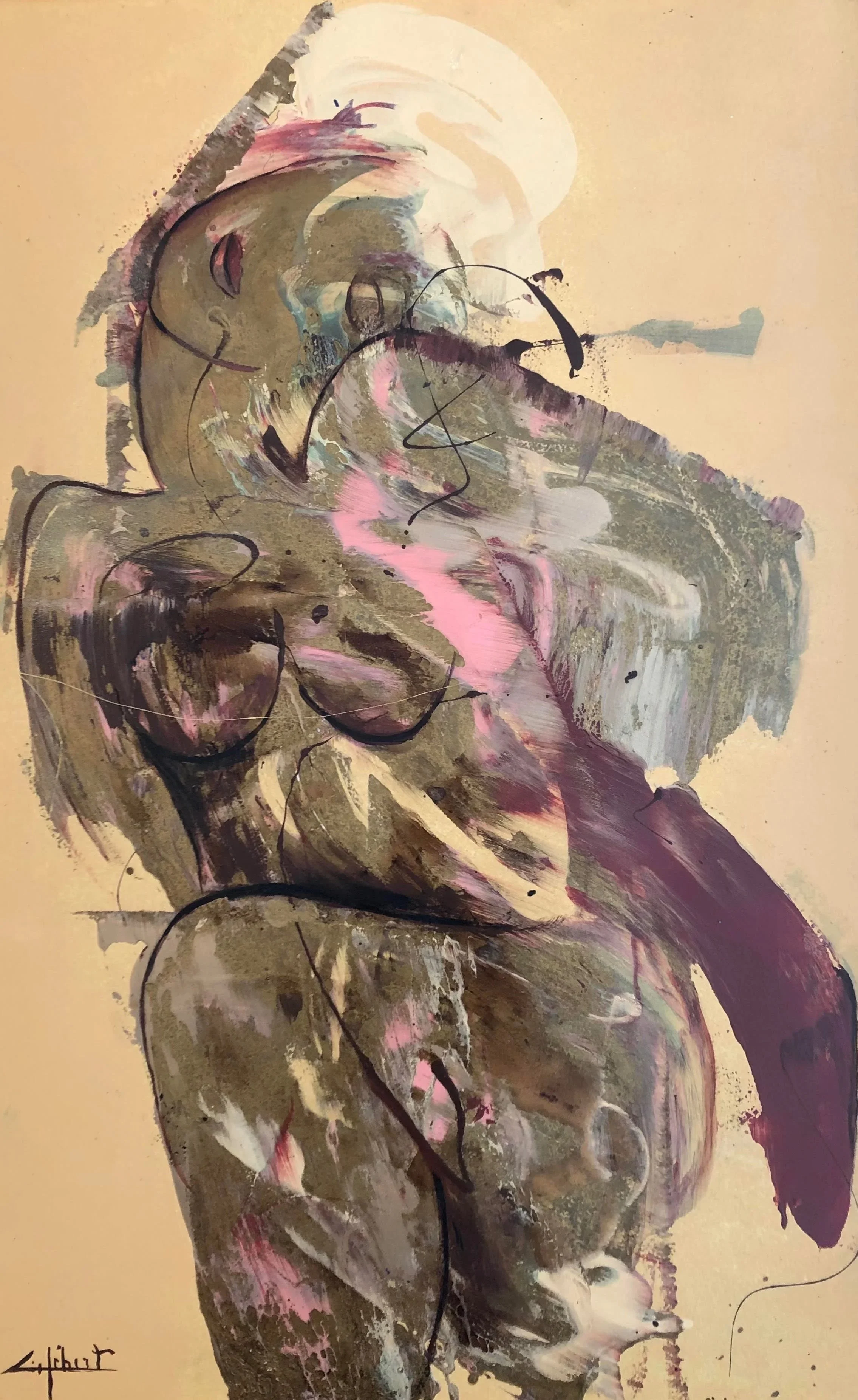
Katerina | Mixed Media on Metal